In the debate about the source of IQ differences across racial and ethnic groups, there are two broad camps. The first is the environmentalist camp, which believes that observed average IQ differences between groups are completely environmental in origin, with no genetic contribution to these differences. The second group is the hereditarian group, which states that differences are partially genetic. There is a great deal of disagreement in the latter group; as long as one thinks that mean racial differences in IQ are 1% of more genetic in origin, a person is a hereditarian.
What is interesting about this debate is the types of people who belong to each group. Scientists who research intelligence (mostly psychologists) are mostly hereditarians (Rindermann et al., 2016). However, people outside the field are more likely to be environmentalists, as shown by recent surveys of anthropologists (Horowitz et al., 2019), social psychologists (von Hippel & Buss, 2018), and teachers (Warne & Burton, 2020).
In Chapter 28 of my book, In the Know: Debunking 35 Myths of Human Intelligence (Warne, 2020), I summarized the results of several sources of data (mostly surveys) showing that, among experts, the hereditarian view had grown in popularity among experts from the 1960s through the 2010s, but that among non-experts the environmentalist view is about as popular now as it was 50 or 60 years ago. Culturally, environmentalism is as dominant now as it was in the 1960s, despite the evidence for the position being weaker than at any time in the last 40 years.
My analysis only extended back to the 1960s because I was not aware of any earlier data about expert and/or non-expert views on the issue when I wrote In the Know. That has since changed, and I now have strong evidence that environmentalism was the dominant view as early as the 1930s.
On the Trail of 1930s Environmentalism
My first hint that environmentalism was culturally dominant for far longer than I believed came from an article by Garrett (1961) discussing the widespread environmentalism that was so dominant that he called it an “equalitarian dogma.” One brief passage shows that this viewpoint was not a product of post-World War II anti-colonialism or the rising civil rights movement in the United States:
Equalitarianism (or egalitarianism, as it is sometimes called) finds its chief support from at least two clearly identifiable sources: the allegedly scientific group who have “proved” equality, and the religious groups who accept this proof and, on the basis of it, assert that belief in racial differences implies “superiority” and “inferiority” and is unchristian, shameful, and blameworthy. Each camp supplements the other. The social scientists turn to moral denunciation when their evidence is feeble, and the religious fall back on ‘science’ to bolster up their ethical preachments. From these two directions the American people have for more than thirty years been subjected to a barrage of propaganda unrivaled in its intensity and self-righteousness. Today in many departments of psychology, anthropology, and even genetics, the equalitarian dogma has been installed as a major premise not to be questioned.
Garrett (1961, p. 481, emphasis added)
This is just one person’s view, but it is telling that Garrett perceived that environmentalism had been the norm “for more than thirty years,” which would mean that (in Garrett’s view) this trend emerged no later than 1930.
I stumbled on an example of 1930s anti-hereditarianism in action several months later. In 1934, Gordon published a paper examining low intellectual functioning among natives living in colonial Kenya. The British Eugenics Society publicized the study in The Times, which used brain size data to supposedly show a low intellectual level in Africans. The backlash, as told by Campbell (2010) was swift and public, with leading scientists like Louis Leakey, Cyril Burt, and Julian Huxley undermining and/or denouncing the research publicly in letters to The Times. Later scientists criticized the research in the scholarly press — even periodicals that were normally sympathetic to this sort of research (Campbell, 2007).
Non-scientists also responded negatively, which historian Chloe Campbell (2007) stated, “. . . point to a growing wider culture of discomfort and doubt about the idea or racial inequality . . . ” (p. 91; see also, Campbell, 2010, pp. 296-298). Although not all responses were negative, the blowback was enough that the controversy killed political support for government-support research for intelligence differences in Kenya (Campbell, 2010).
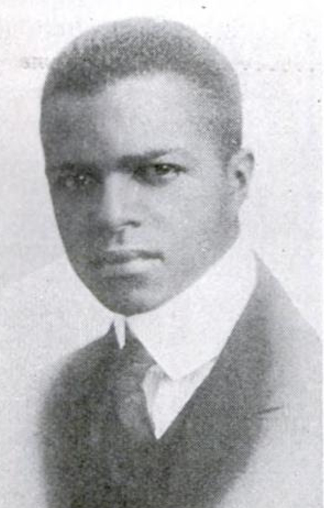
The best evidence I have found of the dominance of the environmentalist view in the 1930s is from a survey conducted by Thompson (1934) of 129 social scientists (77 psychologists, 30 educationalists, and 22 sociologists and anthropologists). The list of respondents includes many names that are recognizable to social scientists today, including Edward Boring, Lewis Terman, Jean Piaget, Franz Boas, and others.
Most respondents to Thompson’s survey thought that the issue was unresolved (62%), and only 19% thought that the data showed that people of African descent were “inherently mentally inferior to Whites” (to use the exact language of the article). The remaining 19% thought that the evidence showed that “inherent” intelligence was equal across the two racial groups (Thompson, 1934).
Thus, it is clear that a hereditarian view was a minority among experts in the 1930s, though the dominant view among scientists at the time was agnosticism. Another important caveat was that a majority or respondents thought that it was plausible — but by no means proven — that there could be average race differences in intelligence (Thompson, 1934).
After encountering this evidence, I have revised my beliefs about the origins of environmentalism in the debate about race differences in intelligence. Rather than being a product of post-war egalitarianism, a strong environmentalist viewpoint preceded World War II. It is clear that the pre-war views of intelligence and race were not guided blindly by racism. Instead, the debate was dominated by people with hereditarian and/or agnostic views. In the 1930s, scientists who confidently attributed race differences in intelligence to genetic causes were in the minority. Even eugenicists of the period (like Huxley and Burt) held strong environmentalist views.
References
Campbell, C. (2007). Race and empire: Eugenics in colonial Kenya. Manchester University Press.
Campbell, C. (2010). Eugenics in colonial Kenya. In A. Bashford & P. Levine (Eds.), The Oxford handbook of the history of eugenics (pp. 289-300). Oxford University Press.
Garrett, H. E. (1961). The equalitarian dogma. Perspectives in Biology and Medicine, 4(4), 480-484. https://doi.org/10.1353/pbm.1961.0028
Gordon, H. L. (1934). Amentia in the East African. Eugenics Review, 25, 223-235.
Horowitz, M., Yaworsky, W., & Kickham, K. (2019). Anthropology’s science wars: Insights from a new survey. Current Anthropology, 60(5), 674-698. https://doi.org/10.1086/705409
Rindermann, H., Becker, D., & Coyle, T. (2016). Survey of expert opinion on intelligence: Causes of international differences in cognitive ability tests. Frontiers in Psychology, 7, Article 399. https://doi.org/10.3389/fpsyg.2016.00399
Thompson, C. H. (1934). The conclusions of scientists relative to racial differences. The Journal of Negro Education, 3(3), 494-512. https://doi.org/10.2307/2292386
von Hippel, W., & Buss, D. M. (2018). Do ideologically driven scientific agendas impede the understanding and acceptance of evolutionary principles in social psychology? In J. T. Crawford & L. Jussim (eds.), The politics of social psychology (pp. 7-25). Routledge.
Warne, R. T. (2020). In the know: Debunking 35 myths about human intelligence. Cambridge University Press. https://doi.org/10.1017/9781108593298
Warne, R. T., & Burton, J. Z. (2020). Beliefs about human intelligence in a sample of teachers and nonteachers. Journal for the Education of the Gifted, 43(2), 143-166. https://doi.org/10.1177/0162353220912010

